Getting Heavy with Mike Mentzer
“Everything that exists has an identity... including muscle tissue.”

The Man Who Rewrote the Rules
Mike Mentzer didn’t just build one of the greatest physiques in bodybuilding history — he dismantled every assumption the sport had about how to get there.
In an era defined by volume, by Arnold’s six-day splits and marathon gym sessions, Mentzer arrived with a radical counter-proposition: less is more. Far less. And backed by the philosophy of Ayn Rand and the science of Arthur Jones, he made the case with a logic so tight it still cuts today.
“The purpose of a set is to stimulate growth. The moment growth has been stimulated, the set should end. Everything beyond that is counterproductive.”
His Heavy Duty system reduced training to its essential mechanism — the single, all-out set taken past failure — and from there stripped everything else away. No filler. No volume for its own sake. No ego reps. Just intensity so complete that the body has no choice but to adapt.
A Bodybuilder Who Read Philosophy
What separated Mentzer from his contemporaries wasn’t just the physique — it was the mind behind it. He was one of the few competitors who could articulate precisely why each training variable existed, grounding every prescription in a logical framework that started with first principles.
He read voraciously. Rand’s Objectivism gave him the epistemological foundation: reality is real, existence exists, and a training system that works must reflect those facts — not wishes, not tradition, not volume myths handed down from champion to champion.
“I began to realize that the only source of valid information about training was not the champions, but the scientists.”
This was a provocation. In 1970s bodybuilding culture, you trained like the champions trained. Mentzer said: prove it.
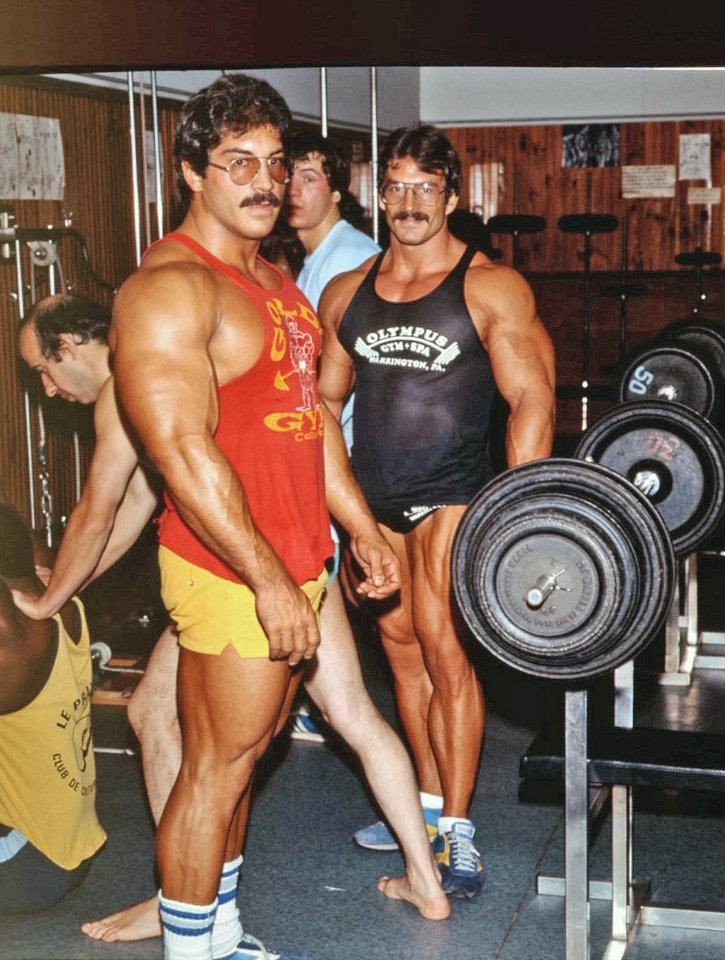
The 1980 Olympia
The controversy that follows Mentzer’s legacy is impossible to ignore. At the 1980 Mr. Olympia in Sydney, competing in the best shape of his life — lean, full, impossibly proportioned — Mentzer finished fifth. Arnold Schwarzenegger, returning from retirement in questionable condition, took the title.
The bodybuilding world never fully reconciled that result. Mentzer certainly didn’t. He retired from competition, bitter and disillusioned, but his influence on training methodology had already taken root.
Why It Still Matters
Decades on, the fitness industry has largely caught up to what Mentzer was saying in 1978. The research on minimum effective dose, on the role of recovery in hypertrophy, on the counterproductive nature of junk volume — it all points in the same direction Mentzer was already running.
He died in 2001, two days after his brother Ray. He was 49.
What he left behind wasn’t just a training system. It was a demand: think for yourself. Don’t copy. Don’t defer. Understand what you’re doing and why — or don’t do it at all.
“The great tragedy is not failure. The great tragedy is the slow walk to a mediocre success.”
That sentence lands harder every year.